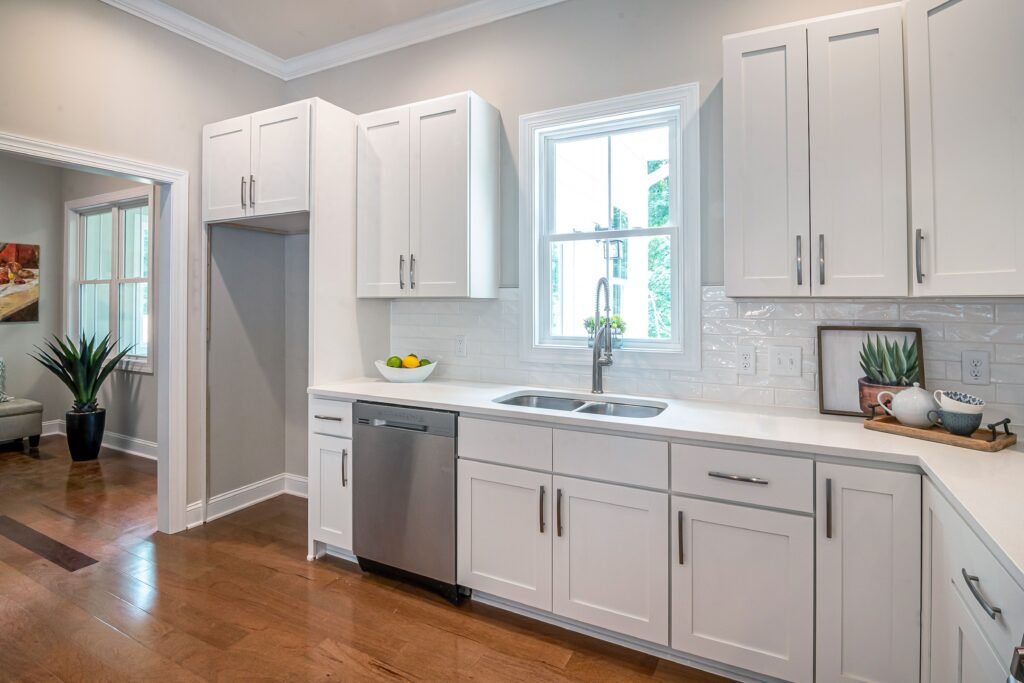
The reface vs replace kitchen cabinets decision is usually the largest single choice inside a kitchen refresh — and the one where the wrong call wastes the most money. Paint is cheapest but changes least. Refacing keeps your boxes and replaces everything you see. Replacement starts over, at the highest cost and longest disruption. This guide compares all three (plus refinishing, often confused with paint), with honest cost estimates, a condition checklist, and decision rules for your own kitchen.
Cabinets sit inside a bigger spending picture. Before committing, set the decision inside planning a budget kitchen renovation so the cabinet budget stays in proportion — counters, flooring, and lighting still need their share.
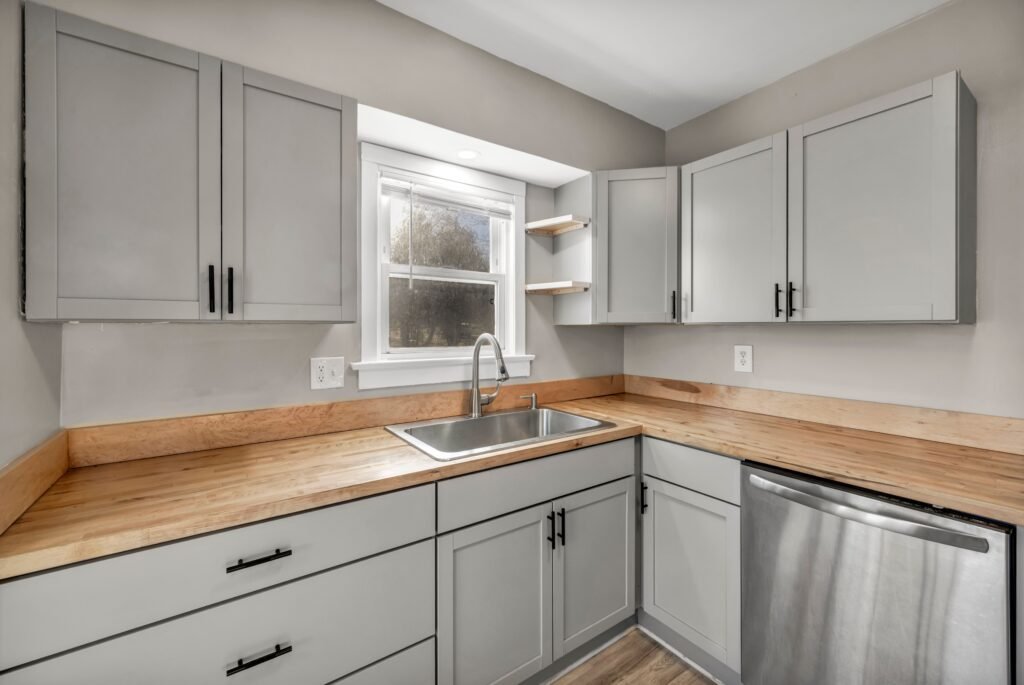
What Each Option Actually Changes
Paint
Painting keeps everything — boxes, doors, drawer fronts, hinges — and changes only color and finish. The work is cleaning, degreasing, sanding, priming, and painting. It is the lowest-cost and most DIY-friendly option, but cannot fix a dated door style, damaged doors, or a layout that does not work. Paint is a color change, not a cabinet change.
Refinish
Refinishing also keeps everything, but sands surfaces back and applies a new stain or clear finish. It suits wood cabinets whose grain you want visible, and costs more than painting because sanding is heavier and finish work more exacting. Refinishing is often confused with refacing; they are different jobs with different price ranges, as the table shows.
Reface
Refacing keeps the boxes and replaces what you see: new doors, drawer fronts, and matching veneer or laminate over visible box surfaces, usually with new hinges and hardware. The kitchen keeps its layout and boxes but looks close to new. Refacing is the most expensive resurfacing option because it uses new materials throughout — but stops well short of replacement because boxes, plumbing, and layout stay put.
Replace
Replacement keeps nothing. Old cabinets come out and new ones go in, usually meaning new counters, plumbing and electrical adjustments, and often layout changes. It is the only option that fixes bad boxes, a bad layout, or a storage plan that never worked — and the most expensive, disruptive, and slowest, because new cabinets must be ordered, delivered, and installed.
Reface vs Replace Kitchen Cabinets: Cost Comparison
Every figure below is a reported estimate from Angi’s 2026 national cost guides, labeled with source and date — planning benchmarks, not quotes. Your price is set by a written estimate after measuring; local labor rates move every figure. Where Angi’s guides report different ranges, both are shown.
| Option | Typical cost (estimate) | Time on site | How long it lasts | Layout change? |
|---|---|---|---|---|
| Paint (pro) | $425–$1,467 typical, ~$943; up to $3,200 for a large kitchen (Angi, Sep 2026) | Days | Full repaint every 8–12 years (Angi, Sep 2026) | No |
| Paint (DIY) | $200–$600 materials + 20–40+ hours (Angi, Sep 2026) | A week or more of evenings/weekends | Same as pro paint if prep is thorough | No |
| Refinish | $2,000–$7,000 (Angi, Aug 2026) | Days | 10–20 years for resurfaced cabinets generally (Angi, Aug 2026) | No |
| Reface | $4,000–$13,500 (Angi, Aug 2026) | 2–5 days; up to a week for large/custom (Angi, Aug 2026) | 10–20 years (Angi, Aug 2026) | No |
| Replace | $2,006–$10,818 installed, ~$6,188 average (Angi, Jul 2026) | Longest: ordering + removal + installation | Resets the clock with new cabinets | Yes |
Three cautions. First, ranges overlap heavily: a large painted kitchen can cost more than a small refaced one, and custom replacement can run far above the range shown (Angi lists custom cabinets at $500–$1,200 per linear foot). Second, the replacement range covers cabinet installation; counters, plumbing, and electrical changes are separate. Third, “resurfacing” as a whole averaged $7,233 nationally (Angi, August 2026), most homeowners paying $4,482–$10,590, or $150–$450 per linear foot — a useful sanity check, but budget from the per-option ranges.
The Condition Check: Are Your Cabinet Boxes Worth Keeping?
Paint, refinish, and reface all keep the boxes — which only makes sense if the boxes deserve keeping:
- Boxes are solid and square. Open every door and drawer. Press box sides and shelves — they should feel rigid, not spongy. Look for water damage under the sink, swelling at the base, and soft spots where shelves meet sides. Damaged boxes cannot be resurfaced into good ones.
- Boxes are worth their material. Solid wood and good plywood boxes are worth keeping. Water-damaged, delaminating, or crumbling particleboard boxes are not — refacing puts new doors on a failing structure.
- Drawers and hinges work. Sticky drawers and tired hinges are fixable (new slides and soft-close hinges are common add-ons), but out-of-square boxes with doors that will not align point toward replacement.
- The layout works. If you like where everything is, resurfacing keeps a good layout. If the layout fights you daily, no finish change fixes it; only replacement moves walls, plumbing, and cabinet positions.
- The storage is enough. Resurfacing adds no drawer, pantry, or deeper cabinet. If the complaint is “not enough storage” rather than “tired look,” replacement — or added cabinetry — is the honest answer.
- The finish problem is cosmetic. Dated color, worn finish, old-fashioned door style, tired hardware: all cosmetic, all fixable by paint or reface. Structural problems are not cosmetic, and no finish hides them long.
If boxes pass and the layout works, the reface vs replace kitchen cabinets decision tilts toward paint or reface, which will serve you well. If either fails, replacement is the only option solving the actual problem.
Decision Rules You Can Apply Today
- Boxes damaged, or layout must change → replace. Do not spend resurfacing money on failing boxes or a hated layout. Get installation quotes and budget for knock-on work (counters, plumbing, electrics).
- Boxes sound, layout works, door style is dated or doors are damaged → reface. New doors, drawer fronts, and veneer give the closest-to-new result without touching the layout. Budget from the refacing range and choose the veneer material deliberately (next section).
- Boxes sound, layout works, doors fine, only color/finish tired → paint or refinish. Paint for a color change; refinish to keep visible wood grain with a new stain or clear finish. Paint is the budget pick; refinish the wood-grain pick.
- Budget is the binding constraint and the cabinets are sound → paint, DIY if you have the time. DIY painting materials run $200–$600, but plan 20–40+ hours and do not skip prep — rushed prep is the most common reason paint jobs fail early.
- Repair cost approaching half the replacement cost → replace. When fixing doors, drawers, and finishes costs as much as new cabinets, replacement becomes the sensible choice.
What Drives the Price Up or Down
- Kitchen size. Resurfacing is commonly priced per linear foot ($150–$450 across methods, per Angi). A 10-linear-foot galley costs far less than a 30-linear-foot kitchen with an island, whatever the method. Measure your cabinet run before comparing quotes.
- Refacing material. The veneer and door material is the biggest cost driver in refacing. Angi’s 2026 per-linear-foot ranges: laminate $50–$125, thermofoil $60–$125, wood veneer $100–$250, solid wood or plywood $200–$500. Laminate and thermofoil are durable and easy to clean; wood veneer takes stain or paint; solid wood looks most like new cabinets and costs most.
- Paint scope. Pro painters commonly charge $30–$60 per linear foot or $100–$250 per door (Angi, Sep 2026). Raised-panel doors cost more than flat Shaker or slab doors; already-painted cabinets need less prep than stained or varnished ones; specialty finishes (glaze, distress, two-tone) add $500–$2,000.
- Prep and repairs. Prep can account for up to half of a painting project’s cost, and patching, leveling, or fixing water damage adds to any option. Handling some prep yourself — cleaning, sanding, removing hardware — lowers the total effectively.
- Add-ons. New hardware ($5–$60 per piece), soft-close hinges or slides ($20–$50 per set), crown molding ($300–$570), glass inserts ($150–$500 per door), and under-cabinet lighting ($200–$600) are commonly added during resurfacing. Price them separately from the base job.
Labor is the largest line item in painting (70–80% of the total, per Angi) and a major share of every other option — why DIY painting saves so much, and why a rushed DIY job costs more if redone.
DIY or Hire a Pro?
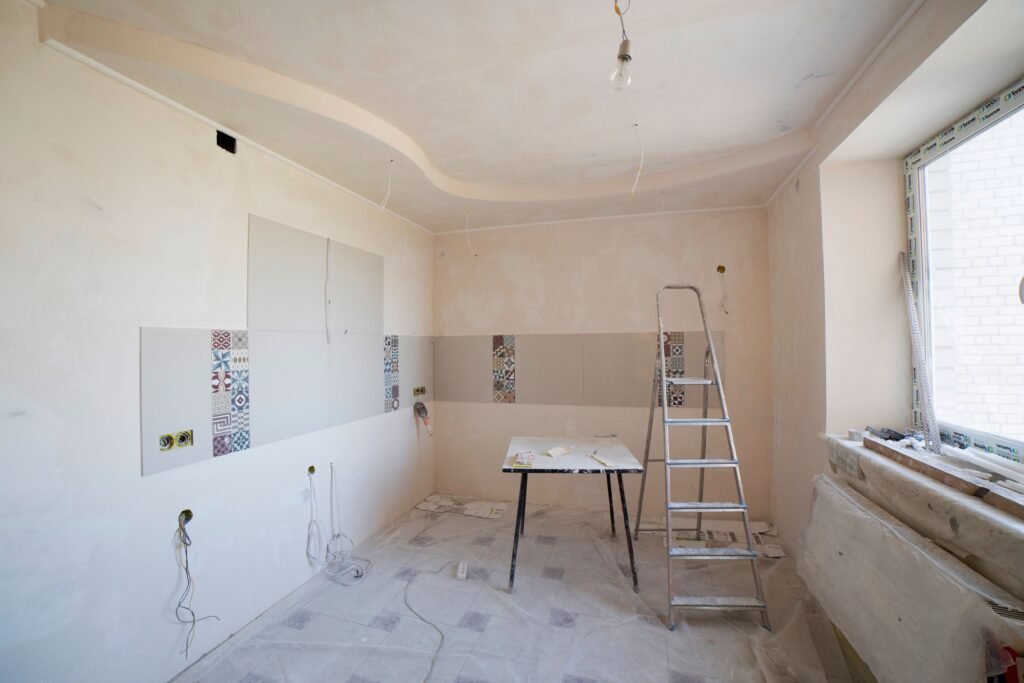
Painting is the most realistic DIY option of the four — and still a serious project. Budget $200–$600 in materials and 20–40+ hours for prep, painting, and reassembly. DIY suits patient homeowners with flat or Shaker doors, sound cabinets, and no lead-paint concern. Hire a pro for complex door details, specialty finishes, significant damage, or heavy daily use.
Refinishing sits between painting and refacing in difficulty: the sanding is heavier, the stain work is less forgiving, and mistakes show. Confident DIYers can do it; most homeowners get better value from a pro.
Refacing is usually a pro job: precise measuring, veneer application, door and drawer-front fitting, hardware installation. A DIY refacing kit exists, but uneven veneer, misaligned doors, and voided warranties make professional installation safer for most kitchens — and Angi’s 2–5-day pro timeline is hard to beat.
Replacement is a pro job for almost everyone: removal, disposal, leveling, plumbing and electrical coordination, precise installation. Angi notes the difficulty, tools, skills, and time required, and recommends a pro. DIY replacement suits only experienced renovators with the right tools and a realistic schedule.
Whatever you choose in the reface vs replace kitchen cabinets decision, get multiple written quotes, compare line by line (materials, labor, prep, add-ons, disposal), and ask what is excluded.
Lead Paint Note for Older Kitchens
If your home was built before 1978, check for lead paint before sanding, stripping, or disturbing any painted cabinet surface. The U.S. federal government banned the sale of lead-based paint for use in homes in 1978, and the EPA reports approximately three-quarters of pre-1978 U.S. homes still contain some lead-based paint. Disturbing painted surfaces can easily create dangerous lead dust.
Get the finish tested before work starts, and if lead is present, follow lead-safe practices or hire a lead-safe certified contractor. The EPA’s Renovation, Repair and Painting (RRP) Rule requires anyone paid to disturb painted surfaces in pre-1978 homes to be certified in lead-safe work practices. See the EPA’s Renovation, Repair and Painting (RRP) program page for the full requirements.
Frequently Asked Questions
Is it cheaper to reface or replace kitchen cabinets?
In the reface vs replace kitchen cabinets comparison, refacing is usually cheaper than replacement for the same kitchen, because boxes, layout, and plumbing stay put. Angi’s 2026 estimates put refacing at $4,000–$13,500 and installed replacement at $2,006–$10,818 on average — but ranges overlap, and custom replacement runs far higher. Compare itemized quotes rather than assuming either option wins.
How long does cabinet refacing take?
Most professional refacing projects take 2–5 days, large or custom kitchens up to a week (Angi, Aug 2026). Replacement takes longer: ordering, removal, installation alongside plumbing or electrical changes.
Can you paint over refaced cabinets later?
Yes — refaced cabinets can be painted later like any other surface, following the same prep rules (clean, degrease, scuff, prime). Veneer or laminate may need a bonding primer; check the primer label against the veneer material.
Is refacing worth it if my cabinets are old?
It depends on the boxes, not the age. Sound, square boxes in a working layout are worth refacing at any age. Damaged, water-swollen, or out-of-square boxes are not — refacing puts new surfaces on a failing structure. Run the condition checklist before deciding.
What is the difference between refinishing and refacing?
Refinishing sands existing doors and boxes and applies a new stain or clear finish — everything stays, the finish changes. Refacing replaces doors and drawer fronts and covers boxes with new veneer — visible parts are new, boxes stay. Refinishing is cheaper; refacing changes the door style.
Once the cabinets are decided, see styling the counters once the cabinets are decided for how to finish the room. For more guides, browse more home improvement guides on the blog.
3 comments