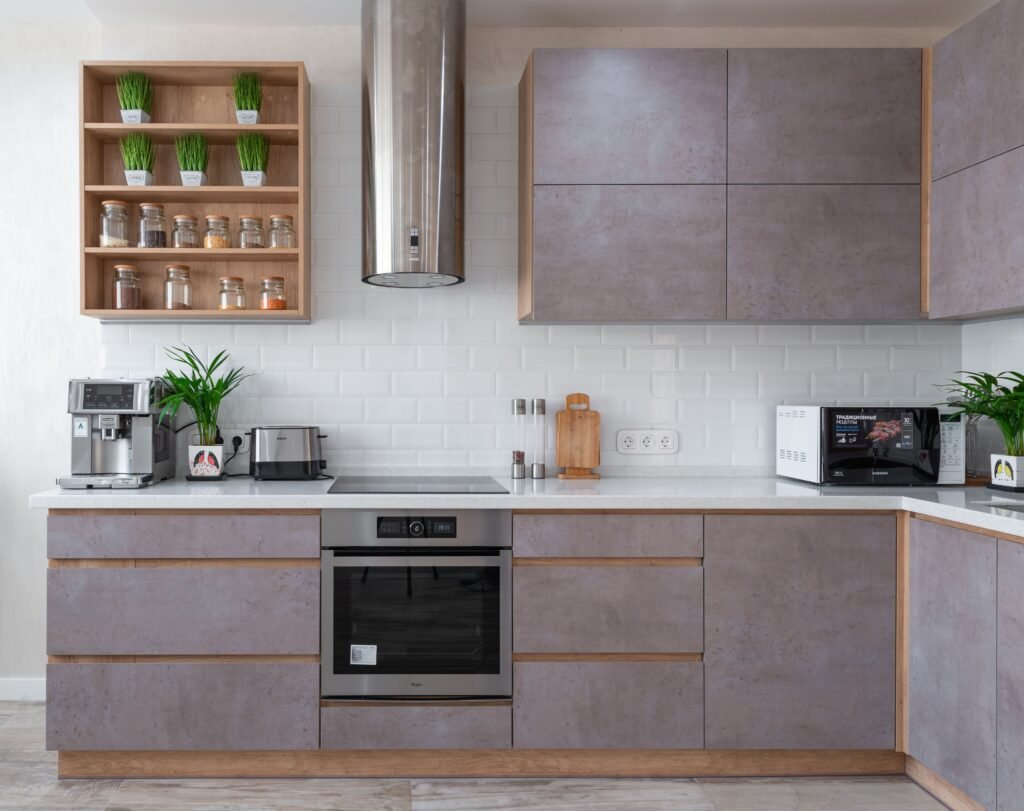
Good kitchen decor ideas start with the room you have, not a shopping list. A kitchen is a workspace first — clear counters, light where you cook, storage you can reach — and the best decor serves the work while making the room feel finished. This guide organizes decorating by zone, style, and budget, so you can pick changes that fit your kitchen instead of copying a look built for a different room.
If the decor is part of a larger refresh, set the spending inside planning a budget kitchen renovation first — decor money without a room budget is how kitchens end up with a beautiful backsplash and nothing left for lighting. For counters specifically, see the detailed kitchen countertop decor ideas; counters get one short passage below, and the detail lives there.
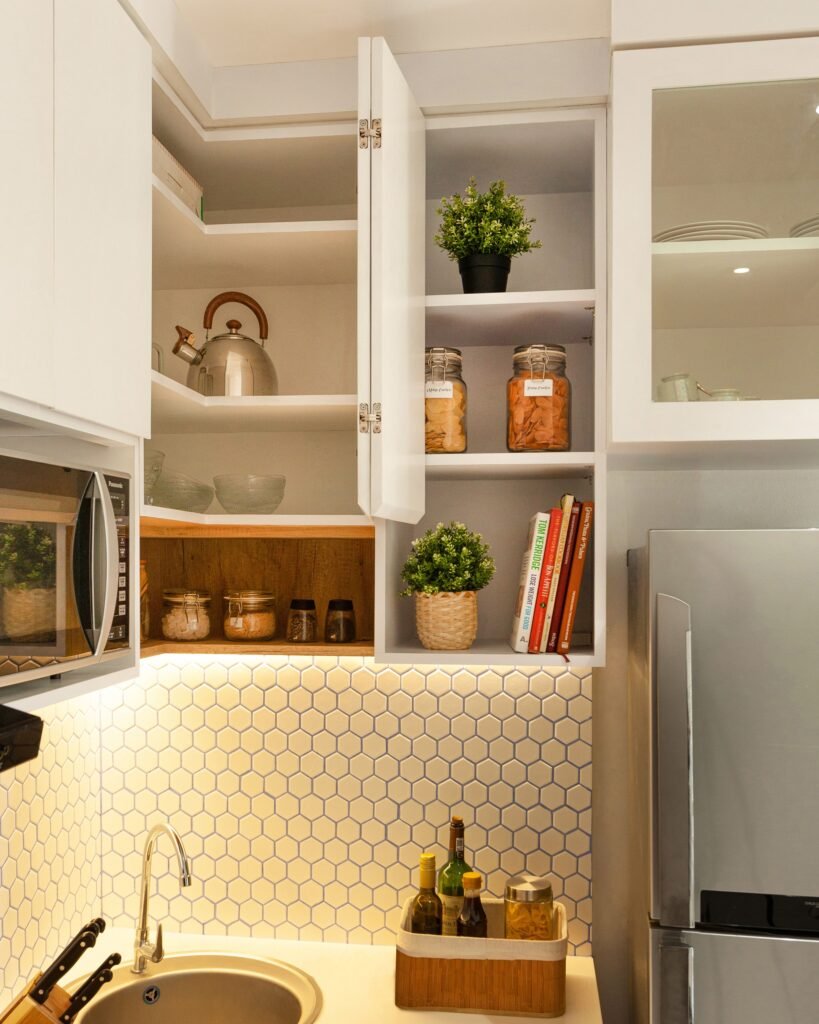
Start with a Plan, Not a Shopping Cart
First, name the one focal point for your kitchen decor ideas — the island, the stove wall, a window, a run of open shelving. Decor works best supporting that point instead of competing with it; if everything shouts, nothing reads as intentional.
Second, fix the palette before buying anything: the colors already in the room (cabinets, counters, floor) plus one or two repeated accents. Neutral dishware on open shelving gives a soothing, uncluttered feel; one repeated accent — black hardware echoed in shelf brackets and a faucet — ties a room together more reliably than five unrelated colors.
Third, decide what stays out and what stays hidden. Decor is what you choose to display; clutter is what you failed to decide about. Everyday dishes, glassware, and cookware earn display because they are used daily; anything neither used nor loved should live behind a door — or leave the room.
Finally, sequence the work: big moves first, live with them a week, then buy finishing pieces.
Kitchen Decor Ideas by Zone
Walls and the Backsplash Wall
Walls carry more character than any other surface, and are the cheapest to change. A single large piece — a framed print, a mirror, a collection of cutting boards — reads better than a scattered gallery of small items. On the backsplash wall, the finish itself is the decor, and anything hung on it should earn the interruption. A bare wall behind a stove or sink is usually the room’s best focal point waiting to happen.
Open Shelving
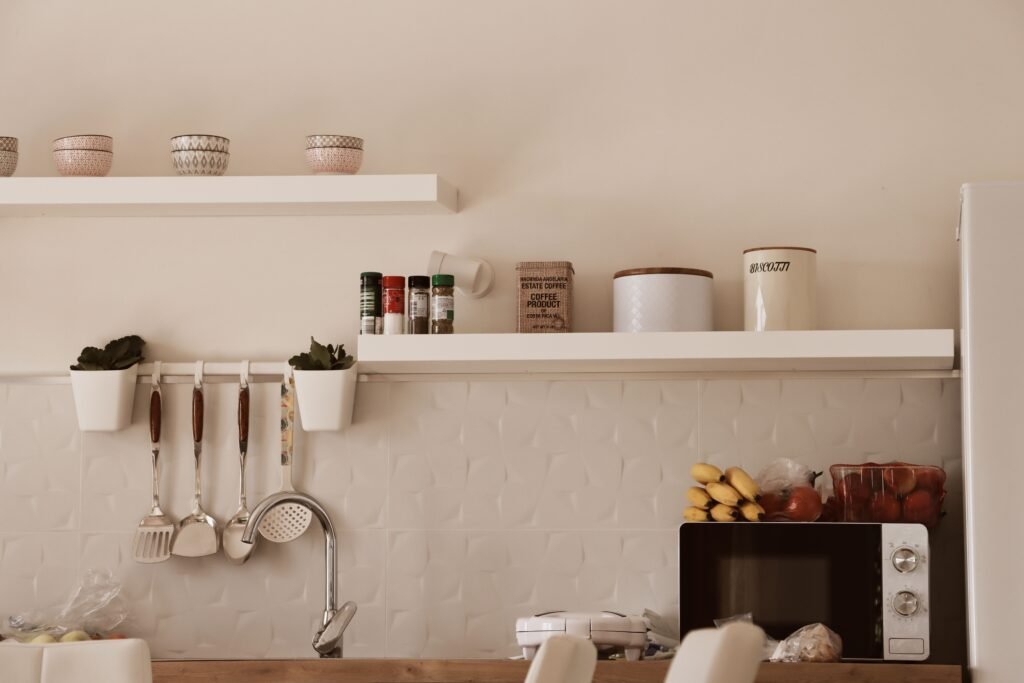
Open shelving replaces upper cabinets with display storage, and changes how a kitchen feels more than almost any other single change. Shelves blending with the cabinets give a calm, built-in look; contrasting shelves — warm wood against white tile, dark against pale walls — become a feature. Display daily necessities neatly and add a plant or bowl for warmth. The full rules, including the maintenance trade-off, are in the shelving section below.
Island and Table
The island or table meets daily life, so keep decor low, useful, and easy to clear. A tray corralling everyday items — oil, salt, a small plant — reads as styled and lifts away in one motion. A bowl of fruit, a vase of stems, or cookbooks add life without claiming the whole surface. Anything tall enough to block conversation across the island is too tall.
Windows and Light
Windows are decor as much as light sources. Keep the sill simple — one or two items, not a row — and let the light do the work. Over the sink, a small plant or two softens the hardest-working corner. Kitchen curtains should be short, washable, and clear of the stove; often a bare window with a simple blind is better.
Floors and Textiles
Textiles warm a hard-surfaced room fast: a washable runner, a folded towel in a repeating color, a cushion on a bench seat. Keep textiles away from the stove and greasiest zones, and choose materials you can actually wash. A rug under a table softens the room; a rug under the cooking triangle mostly collects spills.
Counters
Counters are covered in full in the kitchen countertop decor ideas guide: clear first, style one zone at a time, never let decor claim the landing space beside stove and sink.
Kitchen Decor Ideas by Style
Modern and Minimal
Clean lines, quiet colors, very little on show. Glass shelves with brass or black fittings lighten the look; wooden shelves with white tile give a clean modern feel without going cold. Keep neutrals with one dark accent, hide small appliances, and let one statement light carry the personality. Minimal does not mean empty — everything visible was chosen.
Farmhouse and Rustic
Warm wood, texture, objects with a history. Floating shelves in stained or reclaimed wood suit this style, with wire hooks, woven baskets, and everyday dishware on display. A whitewashed finish on shelving or a hutch softens new wood into the look — see whitewashing wood for the method. Keep the palette warm: creams, soft greens, natural wood, black iron. The risk is over-filling; farmhouse reads best with breathing room.
Traditional and Classic
Symmetry, familiar materials, a settled feel. Pairs matter: matching shelves either side of a window or sink, matching sconces, repeated hardware. Dark walls with light wood shelving and white accents give classic contrast without feeling heavy. Choose timeless over trendy for anything fixed — tile, hardware, lighting — and let textiles and plants carry seasonal changes.
Eclectic and Collected
Mixed, personal, deliberately unmatched — but still edited. The rule that keeps eclectic from becoming chaotic is repetition: one color, material, or shape appearing at least three times across the room. Bright wallpaper behind open shelving can anchor an eclectic kitchen, shelves displaying the mix making the room yours. A piece repeating nothing else needs to be large enough to justify standing alone.
Small Kitchen Decor Ideas
Higher shelving draws the eye up and frees the counter; a tall, narrow unit in a gap or corner adds storage without claiming floor space. Open shelving takes far less visual room than bulky cabinets, suiting small kitchens and oddly shaped spaces, including slanted walls and half-walls.
Keep the palette light and simple: pale cabinets, a light backsplash, one repeated accent. Dark, busy patterns close a tight space in. If you love a bold color, use it in one place — a painted wall, a runner, towels — and keep the rest quiet.
Choose one focal point and protect it — in a small kitchen, two read as clutter. Pick the strongest — usually the window or stove wall — and keep everything else calm. Keep counters as clear as cooking allows: clear counter space is the luxury, and decor that eats it costs more than it gives.
Decorating on a Budget
A kitchen can be transformed without a renovation budget if money goes to the changes with the most leverage. The order below is roughly cheapest-first:
- Clear and rearrange. Move what you own before buying anything. Group like with like, remove what is neither used nor loved, and give the rest room to breathe. This costs nothing and often reveals the room needed editing, not shopping.
- Paint. One wall, the inside of glass-front cabinets, or a piece of furniture. Paint is the cheapest way to change the room’s color story, and painting cabinet interiors a different color has outsized effect.
- Remove cabinet doors. Taking doors off one run of cabinets creates open shelving without buying shelving — and it is reversible. Paint the interiors, style simply, and live with it before committing to permanent open shelves.
- Swap textiles and small objects. A runner, towels, a plant, a bowl — small, washable, easy to change with the seasons.
- Add one shelf or one light. A floating shelf in a gap, or a sconce over the sink, changes how the room reads at night as much as by day.
Set this inside the room’s spending plan — the budget framework for the whole room keeps decor from eating money lighting, storage, or repairs still need. Remember the shelving trade: open shelves cost less than cabinets but demand more cleaning and hold less. Budget is not only money; it is the time spent keeping the result looking good.
Open Shelving Rules That Keep It Looking Good
Open shelving succeeds or fails on styling and maintenance:
- Display what you use daily. Dishes, glassware, mugs, and cookware belong on open shelves because they cycle through use. Objects that never move gather dust and grease.
- Keep the palette simple. One or two colors, neutrals doing most of the work, reads calm and intentional. Mixed, clashing colors read as a sale rack.
- Leave breathing room. Shelves packed edge to edge read as storage, not decor. Gaps between groups let the eye rest.
- Use symmetry where it helps. Matching shelves either side of a window or sink create balance. Asymmetry needs a repeated element to hold it together.
- Mix open and closed. All-open shelving is hard to live with. Keep closed storage for the mismatched, rarely used, and unattractive, and let open shelves show the best of what you own.
- Be honest about maintenance. Open shelves need wiping more often than closed cabinets and get greasy near the stove; a range hood helps but does not eliminate grease. If you will not wipe shelves regularly, keep them from the stove — or keep the doors.
Lighting That Makes the Decor Work
Kitchen decor ideas are only as good as the light on them. One bright ceiling light flattens everything and leaves work surfaces in shadow; layers fix both.
Start with work light: under-cabinet lighting over the counters. Counters should never rely on a ceiling light behind the cook — shadows make a kitchen feel smaller and prep harder. Add a second layer over the island or table — pendants or one fixture doubling as an anchor. Then accents: sconces above shelving, a light inside a glass cabinet, a warm lamp on a side counter. The accent layer is what makes the room feel finished in the evening.
Choose warm-toned bulbs for accent and island layers; cool light over a dining spot feels clinical, while warm light flatters wood, tile, and food. Put layers on separate controls where you can — dimming the work lights and leaving accents on turns a kitchen from workspace into evening room.
Mistakes That Make a Kitchen Look Cluttered
Most cluttered kitchens suffer from a short list of repeatable mistakes, and the best kitchen decor ideas avoid all of them:
- Every surface filled. Decor on every shelf, counter, and wall leaves the eye nowhere to rest. Empty space is part of the design, not a gap to fill.
- Too many colors and patterns. Each new one competes with the last. Repeat a small palette; let one pattern lead.
- Shelves packed tight. Overcrowded shelves read as a cupboard with the doors missing. Edit to what you use and love, and leave gaps.
- Decor fighting the work zones. Objects beside the stove get greasy, beside the sink get splashed, on the prep counter get moved constantly. Keep decor out of the hardest-working 18 inches around stove and sink.
- Ignoring maintenance. Open shelves, textiles, and plants all need upkeep. Unmaintained decor — dusty shelves, a wilting plant, a stained runner — drags the room down faster than bare surfaces.
- Copying a look built for a different room. A look from a large, bright kitchen will not transfer to a small, north-facing one by buying the same objects. Take the principles and adapt them to your light, size, and storage.
Frequently Asked Questions
What are the easiest kitchen decor ideas for a rental?
Start with what leaves no marks: textiles, a freestanding shelf unit, plants, a tray on the counter, removable hooks. A standalone shelf adds display space without drilling. Keep hung items lightweight and check your lease before drilling or painting.
How do I decorate a small kitchen without making it feel cramped?
Use vertical space, keep the palette light, protect one focal point, and keep counters as clear as cooking allows. Open shelving in gaps adds storage without cabinets’ visual bulk. One bold accent is fine; five is not.
Is open shelving a good idea in a kitchen?
It suits people who keep everyday items visible and will wipe shelves regularly. Open shelves need more frequent dusting and cleaning than closed cabinets, and get greasy near the stove. Mixing open and closed storage works for most kitchens.
How do I choose a color scheme for kitchen decor?
Start from what is fixed: cabinets, counters, floor. Add one or two repeated accents and keep the rest neutral. Repeat each accent at least three times across the room so the scheme reads as intentional.
What kitchen decor should I avoid near the stove?
Keep flammable, delicate, or hard-to-clean items out of the immediate stove zone — paper, fabric, and dust-collecting objects suffer most from heat and grease. Stove-side decor should be heat-tolerant, wipeable, and easy to move.
For more ideas, browse more home improvement guides on the blog.
8 comments