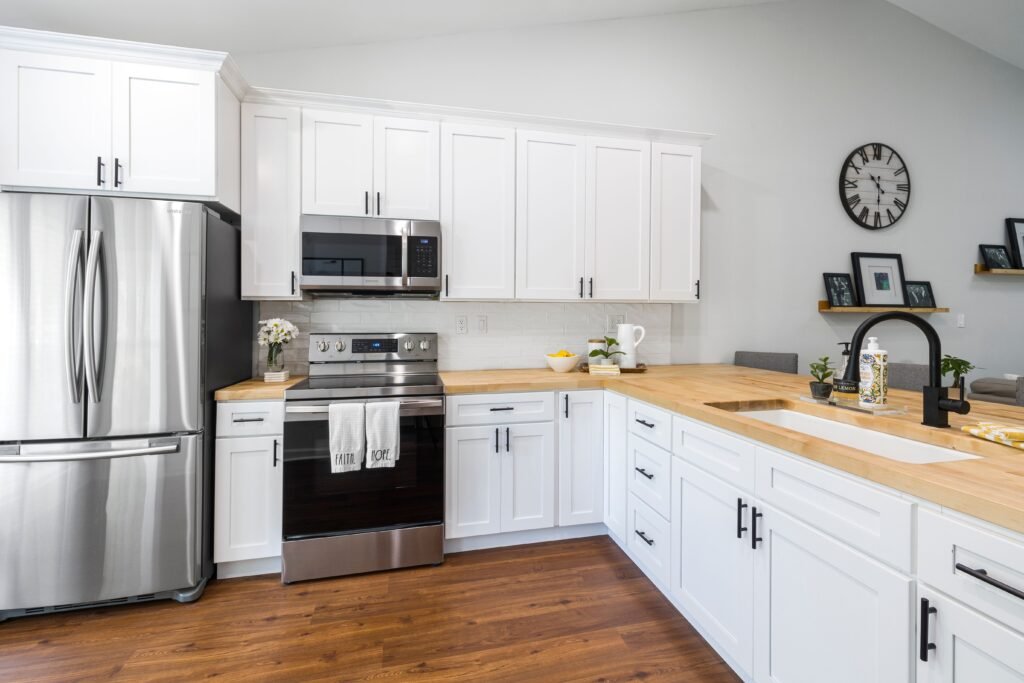
Choosing budget kitchen countertops is a trade-off between three things: cost, abuse tolerance, and care demanded. The cheapest surface is not the best value if it scorches, stains, or needs replacing in five years — and the most durable is not good value if its maintenance never fits your life. This guide compares materials on equal terms, with reported cost ranges, honest durability notes, and the maintenance each needs, so you can pick the surface that fits your kitchen and habits.
Countertops are one line inside a bigger room budget. Set the choice inside planning a budget kitchen renovation before falling in love with a material — the right countertop is one the whole room can afford.
How to Compare Countertop Costs Honestly
Material vs. installed. Some published ranges cover material alone; others include fabrication and installation. A material-only figure always looks cheaper than an installed figure for the same surface, and comparing the two directly misleads. Every range below is labeled with what it covers, as reported by the source. When you get quotes, ask each supplier: does this figure include fabrication, delivery, installation, sink cutouts, edge finishing, and removal of the old counters? The answers differ, and the differences are where budgets break.
The range, not the number. No countertop material has one price: laminate spans budget to premium patterns, granite common colors to rare slabs, quartz builder grades to designer patterns. Use the range to set expectations, then get itemized quotes for your kitchen’s size, layout, and edge choices. A range is a planning tool; a quote is a price.
What the square foot does not include. Edges, sink and cooktop cutouts, backsplash pieces, seams, and old-counter removal can all sit outside a per-square-foot figure — ask about each explicitly. A quote that looks cheapest per square foot can end up most expensive once extras are added.
One source for the table. Cost guides for budget kitchen countertops disagree — sometimes widely — because they survey different projects at different times. To keep the comparison consistent, every figure below comes from one opened source: Angi’s countertop guide, updated July 10, 2026. Other guides report different ranges. Treat all as estimates, and let itemized quotes decide.
Budget Kitchen Countertops Compared
| Material | Cost (Angi estimate, Jul 2026) | Heat | Stains | Scratches | Maintenance load |
|---|---|---|---|---|---|
| Laminate | About $8–$27/sq ft | No — especially heat-sensitive | Resists stains | Shows scratches and nicks | Low — wipe clean |
| Tile (ceramic) | About $5–$10/sq ft | Yes | Resists stains (nonporous) | Resists, can chip/crack | Medium — grout discolors, needs repair |
| Tile (porcelain) | About $3–$28/sq ft | Yes | Resists stains (nonporous) | Resists, can chip/crack | Medium — grout needs care |
| Butcher block | About $20–$70/sq ft | No — hot pans scorch | No — sealant helps, stains sand out | No — do not cut on it | High — extensive, time-consuming |
| Solid surface | About $20–$50/sq ft | No | Resists stains (nonporous) | Scratches, but repairable | Low–medium — scratches sand out |
| Granite (slab) | About $40–$60/sq ft | Yes — hot pans damage sealant | Resists with sealing | Resists scratches | Medium — seal, wipe spills promptly |
| Quartz | About $70–$100/sq ft installed | Yes — but can scorch/crack | Resists stains well | Resists scratches | Low — no sealing needed |
| Marble (slab) | About $40–$100/sq ft | Yes — avoid hot pans | No — porous, needs frequent sealing | No — soft, scratches easily | High — frequent sealing |
| Concrete | About $65–$135/sq ft | Yes | No — porous, frequent sealing | Resists (scratches usually in sealant) | High — frequent sealing |
Read the table of budget kitchen countertops by your priorities, not price alone. Daily hot pans and sharp knives make heat and scratch resistance matter more than a low sticker price. If you will not maintain a surface on schedule, a low-maintenance material at a higher price beats a demanding one you will neglect.
Laminate Countertops on a Budget
Laminate is the lowest-cost mainstream countertop, and the modern version is a long way from the laminate of decades past. Layers of paper covered with melamine resin, bonded to plywood or particleboard — well-designed laminate can now mimic granite and even marble convincingly, in a wide range of colors and patterns.
Strengths: the lowest material cost in the table, easy cleaning, stain resistance, a huge choice of looks. With care, Angi notes, laminate can last around 30 years — a genuine long-term budget choice, not a stopgap.
The limits are equally real. Laminate is especially susceptible to heat damage: a hot pan can scorch or blister it, so trivets are not optional. It shows scratches and nicks, and deep cuts or burns cannot be repaired the way wood or solid surface can. Seams are visible, and the surface cannot take an undermount sink the way stone can.
Laminate suits kitchens where budget is the binding constraint, cooking is moderate rather than heavy, and the household will use trivets and cutting boards consistently. It is the right answer for many kitchens — bought with open eyes about heat and scratches.
Butcher Block Countertops on a Budget
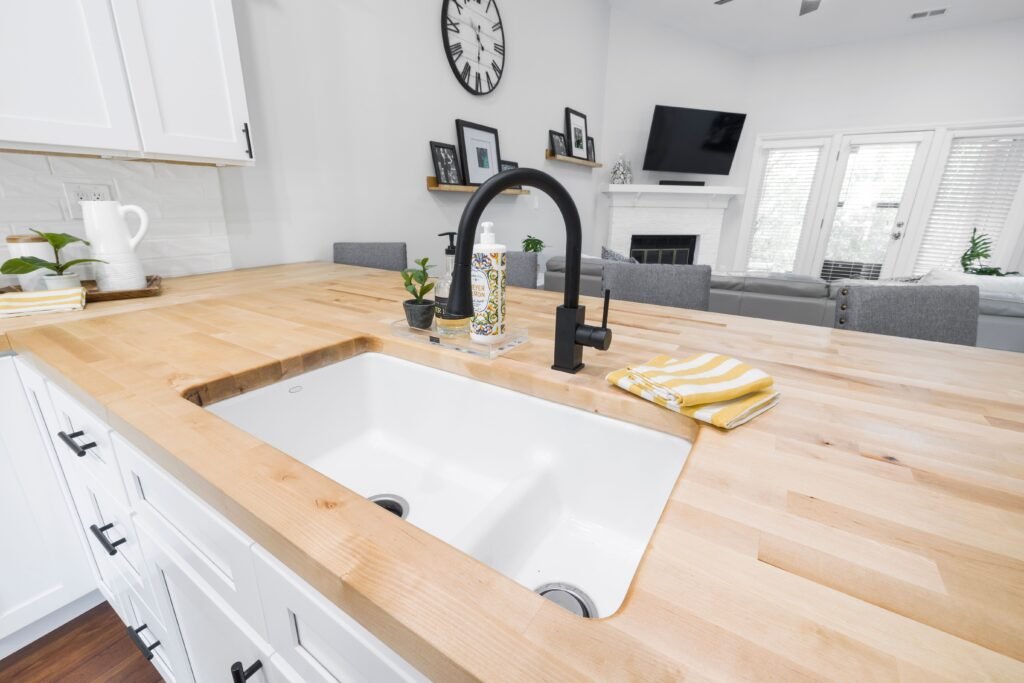
Butcher block brings warmth no manufactured surface matches. The hardwood suits farmhouse, traditional, and vintage kitchens, and ages with character rather than wearing out: stains sand out, and the surface can be refinished toward new. With proper maintenance, it lasts long.
The cost sits mid-table — about $20–$70 per square foot — affordable as a material. The real price is maintenance: Angi describes butcher-block upkeep as extensive and time-consuming, which is why many homeowners keep it to an island rather than the full run. It is not heat resistant (a hot pan scorches it), not stain resistant (sealant helps, stains sand out, but standing water and spills are the enemy), and not scratch resistant — despite the name, do not use it as a cutting board.
Butcher block suits cooks who enjoy maintaining a surface, households that wipe spills promptly and re-seal on schedule, and kitchens where an island-only run gives warmth without committing the whole room to the maintenance load. If that maintenance sounds like a chore you will skip, choose a lower-maintenance surface and spend the difference elsewhere.
Tile, Solid Surface, and Other Budget Options
Tile
Ceramic and porcelain tile give the lowest material cost in the table and complete design freedom — custom patterns, colors, shapes, and sizes, including wood-look and stone-look tiles. Tile is heat resistant, nonporous, and stain resistant, suiting kitchens wanting a handmade or patterned look.
The trade-off is the grout. Tile itself is easy to clean, but grout discolors over time and needs repair. Grout lines make the surface less smooth for rolling pastry or wiping crumbs, and a heavy dropped object can chip or crack a tile. Tile suits budget-first kitchens, rental refreshes, and anyone who likes the look enough to maintain the grout.
Solid Surface
Solid surface (the acrylic-blend category including products like Corian) is man-made, uniform all the way through, matte-finished, and mid-range in price. It looks nicer than laminate, costs less than natural stone or quartz, and has one standout advantage: scratches sand out. A homeowner with an orbital sander and fine sandpaper can repair most damage without a professional.
The limits: not heat resistant, so hot pans need trivets, and soft enough to scratch easily despite the name. But because scratches are repairable, the scratch problem is smaller in practice than on laminate. Solid surface suits households wanting a clean, seamless look at a mid-range price and willing to use trivets.
Granite and Quartz as Stretch Options
Granite and quartz sit above the budget core, but entry-level options can belong in a budget conversation. Granite slabs start around $40 per square foot for common colors, are heat and scratch resistant, and need sealing against stains. Quartz, at about $70–$100 per square foot installed, is the low-maintenance end: stain and scratch resistant, no sealing, in patterns mimicking marble — with the caution that hot pans can scorch or crack it.
If the budget stretches, compare these two against butcher block on total cost of ownership: a higher purchase price with low maintenance can cost less over ten years than a cheaper surface with heavy upkeep. If not, the four materials above cover the room well.
Marble and Concrete: Usually Outside a Budget
Marble and concrete appear for completeness, not as recommendations for a tight budget. Marble is beautiful and heat resistant, but porous, soft, and demanding — frequent sealing, easy staining, easy scratching. Concrete is customizable and durable, but expensive, heavy, porous, and sealing-hungry. Neither is a budget pick.
Ways to Lower the Bill Without Lowering Quality
- Keep the layout. Moving the sink or cooktop adds plumbing and electrical work dwarfing any material saving. A new surface on the existing layout is the cheapest real transformation.
- Simplify the edges. Elaborate edge profiles cost more to fabricate. A simple eased or square edge looks clean and costs less.
- Minimize cutouts and seams. Every sink cutout, cooktop cutout, and seam adds fabrication time; a single-bowl sink and fewer seams keep the bill down.
- Get itemized quotes from more than one supplier. Compare material, fabrication, delivery, installation, cutouts, edges, and removal line by line. The cheapest headline figure is not always the cheapest total.
- Ask about remnants and standard sizes. For a small run — an island, a pantry counter, a bar — ask whether the supplier has remnant pieces or standard-size stock fitting without custom fabrication. Availability varies; the question costs nothing.
- Do the easy work yourself. Clearing counters, removing the old surface (where safe and agreed with the installer), and handling disposal can reduce labor charges. Agree the split in advance, in writing.
- Time it with other work. Installing countertops alongside cabinets or a backsplash can save trip fees and labor — if sequencing is right. Counters go in after cabinets, backsplash after counters.
On DIY: tile is the most DIY-feasible surface here, and even tile demands careful prep and grout work. Laminate, butcher block, solid surface, and stone benefit from professional templating — a mismeasured cut is expensive to fix. The “DIY kitchen countertop makeover” route (painting or refinishing an existing surface) exists, but this guide makes no product claims about it: no makeover product was verified for this article, and a painted countertop is a different finish with different durability. Research the specific product’s durability evidence before committing.
Choosing the Right Countertop for Your Kitchen
- How do you cook? Daily heavy cooking pushes toward heat- and scratch-resistant surfaces (tile, granite) and away from heat-sensitive ones (laminate, butcher block, solid surface) unless trivets and boards are a firm habit.
- How much maintenance will you actually do? If sealing schedules and prompt wipe-ups will not happen, choose a low-maintenance surface (laminate, quartz, solid surface) over a demanding one (butcher block, marble, concrete).
- How long will you stay? For a short stay, a low-cost surface in good condition is rational. For a long stay, total cost of ownership — purchase plus maintenance plus eventual replacement — matters more than the sticker price.
- What does the rest of the room need? A countertop eating the lighting, flooring, or cabinet budget is the wrong countertop, however beautiful. Keep the surface in proportion to the room.
- What will you see every day? You will look at this surface more than any other. Within the options your budget and habits allow, choose one you like looking at — a surface you love gets maintained; one you resent does not.
Frequently Asked Questions
What is the cheapest kitchen countertop material?
By material cost, tile and laminate are the cheapest budget kitchen countertops in Angi’s 2026 ranges: ceramic tile about $5–$10 per square foot, laminate about $8–$27. Installed totals depend on labor, edges, cutouts, and removal — compare itemized quotes rather than material figures alone.
Is butcher block a good budget countertop?
The material is mid-priced (about $20–$70 per square foot) and can be refinished by sanding. The cost is maintenance: regular sealing, prompt spill cleanup, protection from heat and standing water. It is a good budget choice for households that will maintain it — and for island-only runs limiting the maintenance load.
Are laminate countertops durable enough for a busy kitchen?
Laminate is stain resistant and can last around 30 years with care, but is especially susceptible to heat damage and shows scratches and nicks that cannot be repaired. In a busy kitchen, it works when the household uses trivets and cutting boards consistently.
Do I need to seal quartz countertops?
No. Quartz is nonporous and stain resistant without sealing — a main advantage over granite and marble. The care note is heat: hot pans can scorch or crack it, so trivets still matter.
Can I install a budget countertop myself?
Tile is the most DIY-feasible surface, with careful prep. Laminate, butcher block, solid surface, and stone benefit from professional templating because mismeasured cuts are costly. Whatever the material, get cabinets level and measurements exact before the surface is cut.
Once the surface is chosen, see decorating the counters once the surface is chosen for styling that respects the work surface. For more guides, browse more home improvement guides on the blog.
6 comments