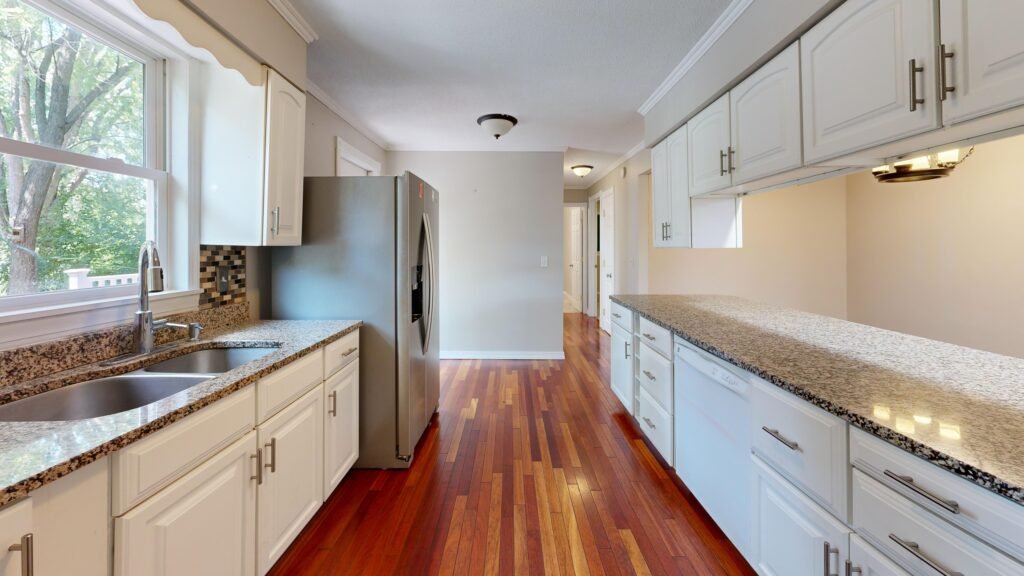
The best budget kitchen flooring ideas start from what a kitchen floor endures: spilled juice, dropped skillets, wet shoes, pet bowls, years of foot traffic — on a surface that must also look like it belongs in the nicest room in the house. Affordable flooring is easy to find; affordable flooring surviving a kitchen is the real test. This guide compares materials on cost, water resistance, durability, and DIY difficulty, with reported estimates from two published cost guides, so you can choose by evidence rather than showroom impression.
Flooring is one line inside a bigger room budget. Set the choice inside planning a budget kitchen renovation before committing — the floor covers more square footage than any other finish, so a small per-square-foot difference becomes a large total fast.
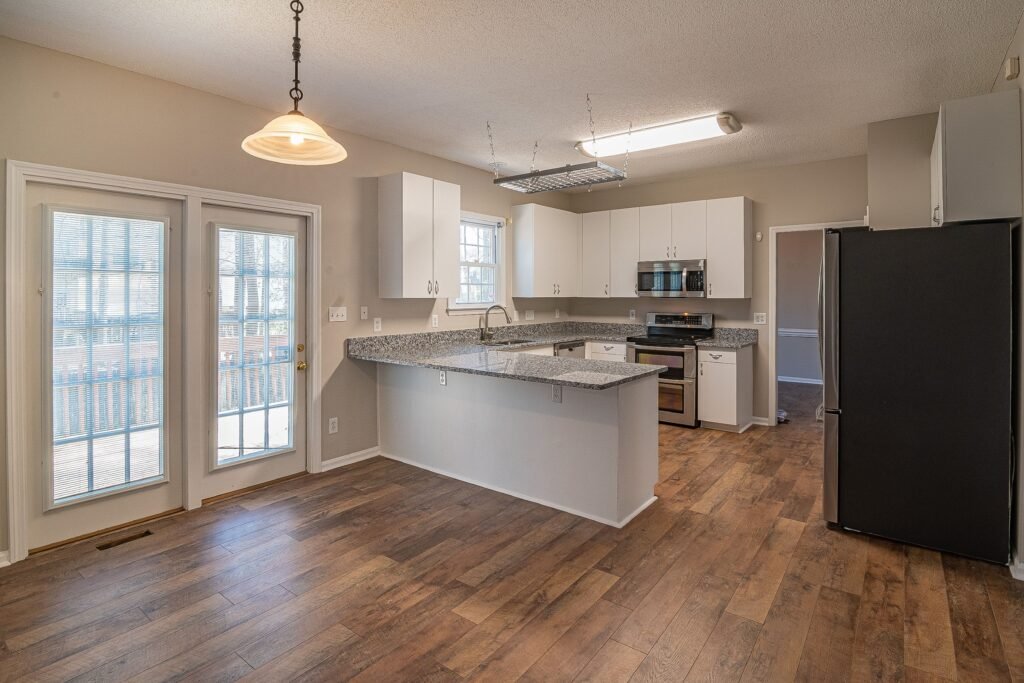
What Makes Flooring Work in a Kitchen
- Durability. The floor must survive frequent spills without staining and dropped cookware without damage. A surface denting or scratching under normal kitchen life looks tired long before it wears out.
- Water resistance. A kitchen is a “semi-wet” room: the floor should handle spills, pet bowls, and regular mopping without damage. The waterproof vs. water-resistant distinction matters enormously — see the next section.
- Scrubbable. Messes end up underfoot; the best kitchen floors clean with sweeping and damp mopping, without special products.
- Design-friendly. The floor is the largest visible surface in the room. It should look intentional next to cabinets and counters; today’s resilient floors can look as good as delicate ones.
Waterproof vs. Water-Resistant: The Distinction That Matters
Waterproof means the material itself is not damaged by water: standing water, spills, and mopping do not harm it. Luxury vinyl plank, sheet vinyl, and porcelain tile fall here. A waterproof floor can still suffer if water gets under it — a floating floor over a flooded subfloor still needs to come up and dry — but the material itself survives.
Water-resistant means the material handles limited moisture — small spills cleaned quickly, damp mopping — but not standing water or flooding. Standard laminate and cork fall here. A water-resistant floor meeting a dishwasher leak or flooded corner can swell, lift, or buckle, and damaged planks usually cannot be repaired — they must be replaced.
The practical rule for budget kitchen flooring ideas: frequent water — young children, pets, a dishwasher or fridge line with leak history, a garden door — means choose waterproof. Water-resistant floors suit drier, calmer kitchens where spills are wiped promptly and the household accepts the discipline. Marketing blurs this line; the specification sheet does not — check it before buying.
Budget Kitchen Flooring Ideas Compared
Every figure below is a reported estimate, labeled with source and date. Angi (updated August 1, 2026) and Bob Vila (updated March 13, 2025) sometimes report different ranges for the same material — both are shown where they differ, because the spread itself is information.
| Material | Material cost (estimate) | Installation (estimate) | Water | DIY difficulty | Lifespan (Angi, 2026) |
|---|---|---|---|---|---|
| Sheet vinyl | $1–$2/sq ft (Bob Vila, 2025) | +$1–$5/sq ft pro (Bob Vila) | Waterproof | Hard — pro recommended | 10–25 yrs (vinyl) |
| Luxury vinyl plank (LVP) | $2–$10/sq ft (Bob Vila); $2–$7 vinyl (Angi) | +$3–$10/sq ft pro (Bob Vila) | Waterproof | Easy — click-lock | 10–25 yrs (vinyl) |
| Laminate | $3–$13/sq ft (Angi, 2026) | +$3–$6/sq ft pro typical (Angi) | Water-resistant, not waterproof | Easy — click-lock | 10–30 yrs |
| Ceramic tile | $3–$15/sq ft (Angi); glazed $4–$15 | Pro recommended; labor varies | Water-resistant | Hard — pro recommended | 75–100+ yrs |
| Porcelain tile | $0.50–$15/sq ft (Bob Vila) | +$4–$32/sq ft pro (Bob Vila) | Waterproof | Hard — pro recommended | 75–100+ yrs (ceramic family) |
| Cork | $3–$11/sq ft (Angi); $3–$9 (Bob Vila) | +$2–$9/sq ft pro (Bob Vila) | Water-resistant | Easy–medium | 15–40 yrs |
| Engineered hardwood | $4.50–$16/sq ft (Angi) | +$3–$6/sq ft pro typical (Angi) | Not waterproof | Medium–hard | 20–30 yrs |
| Solid hardwood | $5–$28/sq ft (Angi) | +$3–$6/sq ft labor (Angi) | Vulnerable to spills | Hard — pro recommended | 30–100+ yrs |
| Bamboo | $2–$20/sq ft installed (Angi) | Included in range | Not waterproof | Medium | 10–30 yrs |
| Brick | $5–$10/sq ft (Angi) | Pro recommended | Stain-vulnerable | Hard — pro recommended | 50–100+ yrs |
| Concrete | $2–$16/sq ft installed (Angi) | Included in range | Needs sealing vs. moisture | Hard — pro | 20–100+ yrs |
| Stone tile | $5–$45/sq ft (Angi; Bob Vila same) | +$3–$15/sq ft pro (Bob Vila) | Porous — seal regularly | Hard — pro recommended | 50–100+ yrs |
Angi’s overall framing is a useful sanity check for budget kitchen flooring ideas: materials run $2–$45 per square foot, installation adding $3–$6 on top. The budget materials below sit at the bottom of that range.
Sheet Vinyl and Luxury Vinyl Plank
Sheet vinyl is the lowest-cost waterproof floor here. It comes in a large sheet rather than small tiles — very few seams for water to seep through to the subfloor, effectively wall-to-wall waterproof protection. It stays warm underfoot, cleans with sweeping and occasional mopping, and comes in patterns mimicking wood, tile, and stone. The catch is installation: the sheet must be cut precisely and glued and rolled carefully to prevent air bubbles, which is why professional installation is recommended. Heavy appliances can leave depressions (coasters under legs help).
Luxury vinyl plank (LVP) is the budget kitchen floor most households should look at first. The planks resemble hardwood, are completely waterproof, and have a slightly cushioned waterproof core feeling soft underfoot. Click-lock planks snap together without attaching to the subfloor, making installation genuinely DIY-friendly — and LVP can go directly over existing tile, concrete, or linoleum, saving removal cost. It cleans with a damp soapy mop. Cautions: not as resilient as porcelain (scooting a heavy refrigerator can scratch it), and heavy appliances may leave depressions. Choose a substantial wear layer for a busy kitchen, and check the specification sheet.
Laminate Flooring in Kitchens
Laminate is the classic budget wood-look floor: layered planks with a design layer mimicking stone, hardwood, or other materials, installed as a click-lock floating floor. At $3–$13 per square foot (Angi, 2026), it undercuts most alternatives, installs easily, and comes in wide design variety. It suits homes with children and DIY installation — with one firm condition.
That condition is water. Laminate is not as water-resistant as vinyl, and is not waterproof. Spills must be cleaned quickly; standing water or flooding can swell, lift, and buckle planks, and damaged laminate cannot be repaired — affected planks must be replaced. Some pricier laminates carry higher waterproof ratings. If your kitchen sees frequent water, or spill discipline is unrealistic, choose vinyl or tile instead. Laminate’s low price is only good value if the floor survives.
Ceramic and Porcelain Tile
Tile is the durability end of the budget range: installed once, kept for decades. Ceramic tile ($3–$15 per square foot, per Angi) is water-resistant, long-lasting, and available in a wide variety of designs. Porcelain, fired hotter than ceramic, is stronger, more damage-resistant, and effectively waterproof. Both handle spills, heat, and heavy traffic without complaint.
The trade-offs are comfort and installation. Tile is hard underfoot — dropped glasses and plates will likely shatter — and can be slippery when wet and cold in winter. Grout needs sealing every 3–4 years. Porcelain is heavy, so it is not usually recommended for a second-story floor without checking the floor system is adequate; ask an engineer or reputable tile setter if in doubt. Installation is a pro job for most homeowners: special underlayment and thinset, precise cutting, and (for porcelain) $4–$32 per square foot on top of the material. Tile suits high-traffic kitchens and households valuing longevity over softness.
Cork, Wood, and Other Options
Cork
Cork is warm, soft, and slightly springy underfoot, reduces sound transfer, and costs $3–$11 per square foot. It installs as peel-and-stick, glue-down, or snap-together tiles, making it DIY-friendly, and can be refinished by sanding and re-sealing. It resists stains but is not stain-proof — spilled wine left standing will mark it — and fades in direct sunlight, so sunny kitchens need curtains or blinds. Pet claws damage it easily. Cork suits lower-traffic kitchens and households without pets. Waterproof cork products ($5–$9 per square foot, per Angi) are the safer kitchen pick.
Engineered and Solid Hardwood
Wood floors in kitchens are beautiful and high-maintenance. Engineered hardwood ($4.50–$16 per square foot) offers the hardwood look at lower cost and is less vulnerable to moisture than solid wood, but scratches, dents, and stains just as easily. Solid hardwood ($5–$28 per square foot plus $3–$6 labor) can last decades with regular sealing and refinishing, but is vulnerable to spills, and chair and stool legs scratch it without floor protectors. Neither is waterproof, and neither belongs in the budget core — but both belong in the conversation for “forever” homes where the household accepts the maintenance.
Stone, Brick, and Concrete
Stone tile ($5–$45 per square foot) is durable, heat resistant, and naturally nonslip, but porous — it stains without regular sealing (every 2–4 years) and needs professional installation. Brick ($5–$10 per square foot) is heat- and fire-resistant, anti-slip, and highly durable, but hard underfoot, stain-vulnerable, and limited in design. Concrete ($2–$16 per square foot installed) is durable, customizable, and genuinely affordable — but heavy (save it for kitchens not above another room), needing sealing against moisture and staining, and less comfortable underfoot. All three suit specific styles — industrial, rustic, modern — and need professional installation.
DIY Installation: What Is Realistic?
- Realistic DIY: click-lock LVP and click-lock laminate over a sound, level subfloor. Both are designed for it, come with installation instructions, and save the full labor charge. Budget a weekend for an average kitchen, plus time for trim and transitions.
- DIY with care: cork (peel-and-stick or snap-together) and sheet vinyl only with experience in precise cutting — a miscut sheet is wasted material.
- Hire a pro: ceramic and porcelain tile, stone tile, brick, solid hardwood, and any floor over a subfloor needing leveling, repair, or moisture treatment. Tile and stone need special underlayment, thinset, and cutting tools; hardwood needs acclimation, nailing or gluing skill, and finishing. The labor charge buys a floor staying flat, staying put, and staying warranted.
- Whatever budget kitchen flooring ideas you choose: check the subfloor first. A floating floor over an uneven or damp subfloor telegraphs every flaw and may fail early. Fix the subfloor before the floor goes down, not after.
Frequently Asked Questions
What is the cheapest kitchen flooring that is still waterproof?
Sheet vinyl is the cheapest waterproof option: $1–$2 per square foot for material (Bob Vila, 2025), plus $1–$5 for professional installation. Luxury vinyl plank is the cheapest waterproof DIY option, at $2–$10 per square foot with click-lock installation.
Is laminate flooring OK in a kitchen?
Standard laminate is water-resistant, not waterproof. It works where spills are wiped quickly and standing water never happens, but a dishwasher leak or flood can swell and buckle it beyond repair. For wet or busy kitchens, vinyl or tile is safer. Check the specification sheet — some pricier laminates carry higher waterproof ratings.
Is tile too cold and hard for a kitchen floor?
Tile is hard (dropped dishes shatter) and can feel cold in winter — its main comfort drawback. Rugs and runners help, and underfloor heating, where the budget allows, removes the cold entirely. The trade is longevity: tile outlasts every other material here.
Can I install vinyl plank flooring over my existing floor?
Often, yes. LVP can go directly over existing tile, concrete, or linoleum, provided it is sound, level, and dry. Check installation instructions and subfloor requirements — an uneven or damp base causes problems whatever goes over it.
How long does budget kitchen flooring last?
It depends on the material. Angi’s 2026 lifespan ranges: vinyl 10–25 years, laminate 10–30, cork 15–40, engineered hardwood 20–30, ceramic tile 75–100+ years. Installation, water exposure, and maintenance move any floor within — or outside — its range.
Set the flooring choice against the rest of the room — the whole-kitchen budget framework keeps a per-square-foot decision in proportion. For more guides, browse more home improvement guides on the blog.
1 comment