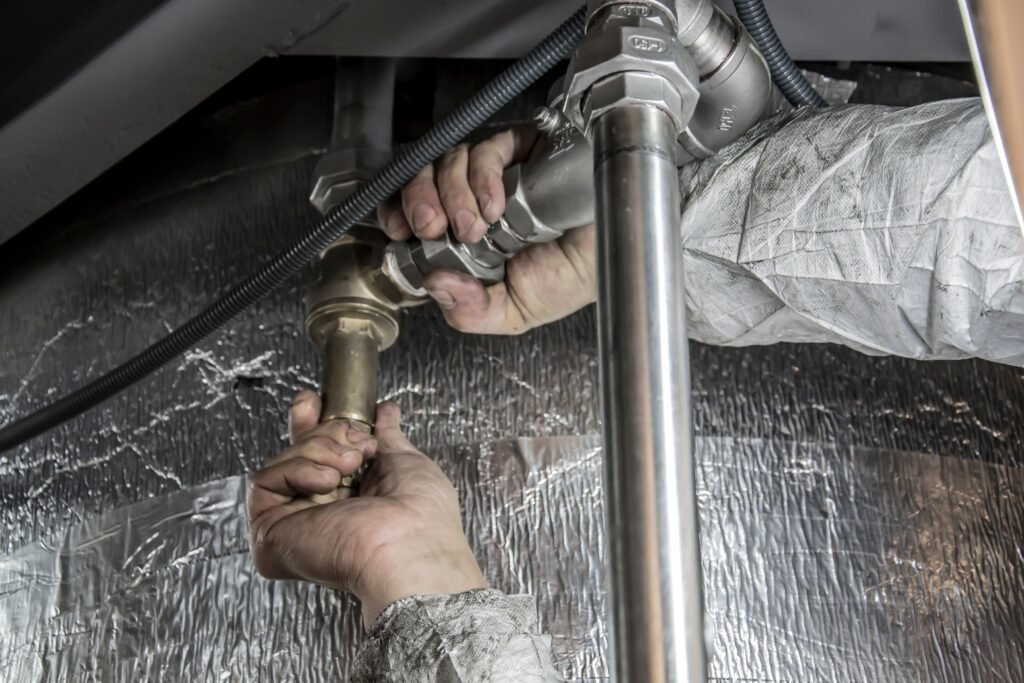
Learning how to prevent frozen pipes in Texas is a short, cheap job that prevents one of the most expensive failures a Texas home can suffer. Water expands as it freezes, and that expansion puts tremendous pressure on whatever contains it — including metal and plastic pipes. No matter the strength of the container, expanding water can cause pipes to break, and a burst pipe can flood a home in hours. Texas homes are especially vulnerable because many were built for heat, not sustained freezing: pipes run through unheated attics, garages, and exterior walls with little insulation, and a freeze that lasts days finds every one of them.
The good news about how to prevent frozen pipes in Texas is that prevention is mostly preparation done once, in good weather, plus a few habits during a freeze. This guide follows the American Red Cross and Texas A&M AgriLife Extension guidance: which pipes freeze first, what to do before cold weather, what to do during a freeze, and how to thaw a frozen pipe safely — and when to call a licensed plumber instead. If a pipe has already burst and water is flowing, shut off the main water valve and call a professional immediately; this guide is prevention, not emergency repair.
Which Pipes Freeze First
The American Red Cross identifies three categories of pipe that freeze most frequently:
- Pipes exposed to severe cold — outdoor hose bibs, swimming pool supply lines, and water sprinkler lines.
- Water supply pipes in unheated interior areas — basements, crawl spaces, attics, garages, and kitchen cabinets.
- Pipes running against exterior walls with little or no insulation.
Texas A&M AgriLife Extension adds well houses to the list, and notes that pipes with northern exposure face increased risk. Water pipes can freeze and burst when the outside temperature reaches 20°F or below, but AgriLife Extension advises taking precautions any time temperatures dip below freezing — the risk does not wait for 20°F.
The first step in how to prevent frozen pipes in Texas is to walk your house before winter and find your vulnerable pipes: the hose bibs, the pipes in the attic and garage, the pipes under kitchen and bathroom sinks on exterior walls, and the pool and sprinkler lines. Every pipe you find in this walk is a pipe you can protect; every pipe you miss is a pipe the freeze will find.
Before Cold Weather: Prepare in Good Weather
AgriLife Extension’s advice is to act early: “Prepare now because supplies of insulation and parts might be limited during a rush for items needed to protect pipes just before freezing temperatures arrive.” Do this work on a mild day, not the day the freeze warning is issued.
Drain and protect outdoor water
- Remove, drain, and store hoses. Disconnect every outdoor hose, drain it, and store it. A connected hose traps water in the bib and the pipe behind it.
- Close inside valves, open outside bibs. For hose bibs with an inside shutoff valve, close the inside valve, then open the outside bib to let water drain out. Keep the outside valve open so any water remaining in the pipe can expand without breaking the pipe (Red Cross).
- Drain pool and sprinkler lines following the manufacturer’s or installer’s directions. Do not put antifreeze in these lines unless directed — antifreeze is environmentally harmful and dangerous to humans, pets, wildlife, and landscaping (Red Cross).
- Fit foam faucet covers. Foam covers over outdoor faucets add protection to the most vulnerable outdoor point. AgriLife Extension notes covers cost around $4 — the cheapest insurance in the house.
Insulate exposed pipes
- Add insulation to attics, basements, and crawl spaces. Insulation keeps these areas warmer, which protects the pipes running through them (Red Cross).
- Insulate the pipes themselves. Pipe sleeves, UL-listed heat tape, and heat cable are made for this job, and are available at local plumbing supply retailers. Both hot and cold water pipes in unheated areas should be insulated — the hot line can freeze too. Even a quarter-inch of newspaper can provide significant protection in areas that do not usually see frequent or prolonged freezing (Red Cross); AgriLife Extension agrees that newspaper provides some protection as long as exposure is not prolonged. Newspaper is a stopgap, not a substitute for proper insulation where freezes are sustained.
- Consider relocating exposed pipes if a pipe is chronically vulnerable and accessible — a plumber can advise whether relocation is practical. For most homes, insulation plus the during-freeze habits below is enough.
- Heat lamps in lesser-insulated spaces. AgriLife Extension notes that heat lamps raising temperatures in well houses or basements can help prevent breaks. Any heat source near pipes needs clear space and must never be left in contact with insulation, wood, or stored items.
AgriLife Extension’s cost framing is worth quoting: “Covers are around $4, and insulation or heat tape are very inexpensive relative to paying for repairs. Adding protective elements to any weak points is a good investment against short-term freezes.” The whole preparation job — covers, sleeves, and tape — typically costs far less than a single plumber’s emergency visit.
How to Prevent Frozen Pipes in Texas During a Freeze
When freezing weather arrives, switch from preparation to habits. These are the Red Cross during-cold recommendations, plus AgriLife Extension’s Texas notes:
| Habit | What to do | Why |
|---|---|---|
| Keep garage doors closed | If water supply lines run through the garage | Keeps the garage — and the pipes in it — warmer |
| Open cabinet doors | Open kitchen and bathroom cabinet doors under sinks | Lets warmer air circulate around the plumbing |
| Drip faucets | Let cold water drip from faucets served by exposed pipes | Running water, even at a trickle, helps prevent freezing |
| Steady thermostat | Keep the same temperature day and night | Suspending lower nighttime temperatures prevents a far more costly repair |
| Heat on when away | Leave the heat on, no lower than 55°F | An unheated house freezes pipes fast |
| Let water run slightly | During prolonged freezing, a slight flow helps | AgriLife Extension: leaving water running slightly helps during prolonged freezing |
Two details deserve emphasis. First, move harmful cleaners and household chemicals out of children’s reach when you open cabinet doors — the Red Cross flags this explicitly, and it is easy to forget in a freeze-preparation rush. Second, the drip costs water but saves pipes: a trickle from a faucet served by an exposed pipe keeps water moving, and moving water freezes far less readily than still water. During a prolonged freeze, AgriLife Extension advises letting outdoor water systems drip slowly as well, or draining and covering them.
If you will be away during cold weather, leave the heat on at no lower than 55°F, and consider asking someone to check the house — a simple part of how to prevent frozen pipes in Texas. An empty house with the heat off is the highest-risk freeze scenario there is.
How to Thaw a Frozen Pipe — Safely
If you turn on a faucet and only a trickle comes out, suspect a frozen pipe. Likely places are against exterior walls or where the water service enters the home through the foundation. The Red Cross thawing steps:
- Keep the faucet open. As the frozen area melts, water will begin to flow through it, and running water helps melt the remaining ice.
- Apply heat gently. Use an electric heating pad wrapped around the pipe, an electric hair dryer, a portable space heater kept away from flammable materials, or towels soaked in hot water wrapped around the pipe.
- Never use an open flame. Do not use a blowtorch, kerosene or propane heater, charcoal stove, or any other open-flame device. Open flame on a frozen pipe is a fire risk and can damage the pipe.
- Apply heat until full water pressure is restored. Be patient — thawing takes time, and stopping early leaves ice that refreezes.
- Check all other faucets. If one pipe froze, others may have frozen too. Check every faucet in the home.
- Call a licensed plumber if you cannot locate the frozen area, if it is not accessible, or if you cannot thaw the pipe. A frozen section inside a wall, under a slab, or in a crawl space you cannot safely reach is a professional’s job.
After thawing, watch the pipe and the surrounding area for leaks: a pipe that froze may have cracked, and the leak shows only once the ice melts and full pressure returns. Check the wall, floor, and ceiling around the thawed section for dampness over the next day. If you find a leak, shut off the water to that section — or the main shutoff — and call a plumber.
Know Your Main Shutoff Before You Need It
Every adult in the house should know where the main water shutoff is — usually near the water meter box or where the main line enters the house — and should have tested it. In a burst-pipe emergency, the shutoff is the difference between a puddle and a flood: minutes of flowing water do more damage than the burst itself. Test the shutoff yearly; a valve that has not moved in years may stick when you need it most. If the shutoff is hard to reach, stiff, or corroded, have a plumber service or replace it before winter, not during a freeze.
See the American Red Cross guide to preventing and thawing frozen pipes and the Texas A&M AgriLife Extension winter weather guidance for the full source material behind this guide.
Frequently Asked Questions
At what temperature do pipes freeze in Texas?
Water pipes can freeze and burst when the outside temperature reaches 20°F or below, per Texas A&M AgriLife Extension — but precautions should start any time temperatures dip below freezing. Pipes with northern exposure, pipes in unheated areas, and pipes along exterior walls freeze first. Duration matters as much as temperature: a long freeze at 28°F can do what a brief dip to 20°F does not.
Should I drip my faucets during a Texas freeze?
Yes, for faucets served by exposed pipes. The Red Cross advises letting cold water drip — even a trickle helps prevent freezing — and AgriLife Extension notes that leaving water running slightly helps during prolonged freezing temperatures. The water cost is small against a burst-pipe repair.
What is the cheapest way to protect pipes from freezing?
Foam faucet covers at around $4 each (AgriLife Extension), plus pipe insulation sleeves and heat tape, which AgriLife Extension describes as very inexpensive relative to repair costs. Disconnecting and draining hoses costs nothing. The whole preparation job is one of the cheapest in home maintenance.
How do I thaw a frozen pipe safely?
Keep the faucet open, and apply gentle heat: an electric heating pad, a hair dryer, a portable space heater kept away from flammables, or hot-water-soaked towels. Never use a blowtorch, kerosene or propane heater, charcoal stove, or open flame. If you cannot find or reach the frozen section, or cannot thaw it, call a licensed plumber.
What should I do if a pipe bursts?
Shut off the main water valve immediately, then call a licensed plumber. Remove standing water, protect belongings, and document the damage with photos for your insurer. Do not attempt to repair a burst pipe yourself unless you have plumbing experience and the right parts — a bad repair leaks again.
For more guides, browse more home improvement guides on the blog.
1 comment